Sunday, December 12, 1999

Waking Dream

I thought the dreams were marble, and tried to sculpture you.
I used my eyes as chisels, and murmurs were your mould.
My restless sleep is there my workshop to unfold,
And to imprint your image in everything I do.

It’s been a while since dreaming escaped into the real,
Or, maybe, glimpse of real invaded all my dreams.
My daily lonely wonder’s no longer what it seems,
And every waking moment your touch I seem to feel.

I know the morning shadows are weaving their map.
If it’s a dream, please, whisper. I don’t want to wake up.


Virgiliu Pop
Glasgow, December the 12th, 1999

Sunday, April 9, 1995

Philemon and Baucis

Hellenic history notes, printed in lyre sound, trips of the Gods on Earth. Clothed in bulls or mortals, their descent from the Olympian heights to mingle with the crowd is a fact of the normal. The aftermath, however, is not.
That morning, Hellios was pouring upon Phrygia an unequalled soft light. On a river shore, two tired travellers were following their path to nowhere. It was, maybe, the easiest way - because the path is not imposed - or maybe the most difficult, as a guide to nowhere is impossible to find. But, while their way into space was of their choice, the one in time was decided by Chronos; with every steps they were taking, the morning was becoming noon, and the noon, evening. And, as the aim of their trip - nowhere - becomes during the night everywhere, every night the two travellers were able - or had - to stop. Either under the roof of a house, or under the hiding mantle of the night.
It would be improper to say that by the sunset the Gods have put in their way a village. Because Gods were themselves - Zeus, the master of the Universe, and Hermes - descended upon Phrygian realms from the hights of the Olympus (or, rather, from the strings of the aeds). Knocking from gate to gate, they were asking for hospitality in the name of the Olympians. But what rich household could lower itself to receive two dust-snowed travellers? The golden and silver gates were closing, one after another, in their face, the zephyr multiplying from house to house the refusal of hospitality.
It was past sunset when, eventually, the celestial eyes rested upon a home clothed in wood, the humblest house in all the village. An old man welcomed the two travellers inside.
They were telling about this old man that his love for Baucis - his wife - was limitless. The same, Baucis was thinking that the greatest gift Gods made to a mortal was Philemon. While singing their story, the strings of the lyre were stopping when they were to speak about the love they cared for eachother. Because the rest or the torment of the love cannot be played by any string.
And, when in their life it was so much love, how could they care for gold? Therefore, anything was theirs belonged to others, as that night their house was the home of two tired travellers. A godly house, I mean.
Hebe, the cup-bearer of Olympus may have to learn from the two old people when they were serving the Gods. Especially because they were unaware who the two guests were.
Treated with the best of that home, the two travellers unveiled, at midnight time, their true identity. The same, they shared with the elderly couple their decision to punish the whole village for its ingrate behaviour that day. Tormented, following the Gods, Philemon and Baucis, holding hands as always, climbed a hill where the destructive wrath of the celestial revenge could not reach them. Behind them, the village they used to live was already buried under the mirror of a lake. And in the place of the house that was their dwelling place for a life, and the dwelling place of the Gods for a night, the Godly powers have built an isle where a temple of white marble and gold laid. And Zeus was to be always present in the place he has found so much hospitality, in the form of a statue.
The Olympians were accustomed to answer with hate to hate, and with indifference to good. This time, however, Zeus decided that the elderly couple fully deserved a reward.
The temptation of the gold was indifferent to Philemon. Youth, that Gods could give back both to Philemon and Baucis, has been so beautiful, that to be lived again would have meant to destroy the memories of the past by transforming them into the sharp present. Therefore, Philemon spoke to Zeus:
“It is so hard, my master, to ask for such a huge thing as my most priced desire is. Nevertheless, in your limitless justice, you promised to us a seamless gift. I beg you, therefore, for your mercy in making so that, when time is I close my eyes forever, this shall be at once with the one I love most”.
Baucis looked with tearful eyes at Philemon. So much love as in that glance could not be comprehended even by Eros. Surprised by the modesty of the reward asked for, Zeus said: “Let it be!”, and descended together with Hermes and the elderly couple at the temple grown from the waters. Here, the Olympians told them that they were to serve Zeus until Philemon will be united in death with the one he loves. Although they did not ask for gold, Zeus gave them on that island broad orchards, and a servant - Antigona, wearing the same name as the one that, once upon a time, will be guiding Oedipus in his long wanderings. It is difficult to serve Zeus with arms weakened by old age; therefore, Antigona was to be of great help.
Merciless, time poured more old age upon Philemon and Baucis. But the fact that the godly reward will not separate Baucis of Philemon even after death was giving Baucis power to live in rest her old days.
It was noon when the claw of the ending bent Philemon’s knees. With tearful eyes, the old man prepared to give a copper coin to Charon, the one who will cross his soul over the Styx. He was alone in the orchard when death took him.
In the same moment, in the temple, Baucis saw how beautiful Antigona fell in the arms of death.

Virgiliu Pop

Saturday, April 8, 1995

Eskaton - The Last One

If the Absolute lacks an atom, it is not absolute anymore. And the Olympian absolute lacks an only thing, sufficient though to put the Gods on the same level with the mortals: they cannot oppose Destiny.
From a certain time now - who could tell its measure - Zeus seemed touched by a mysterious disease. He ceased to throw his flashes of light and malediction over Greece and Arcadia; he would rather spend some time now and then in the cave that sheltered his infancy. Rumours circulated by the nymphs were telling that the master of the Olympus was gathering his thoughts there. Sitting on a stone, with his head in his palms, he was meditating like the most ordinary philosopher. A meditating God was of no comprehension - especially if the God was the Master of the Olympus himself, known for his impulsivity, for the trigger-happiness shown in his doings. However, it seemed that reality was in tone with the rumours. Zeus himself was scared of his recent human behaviour - especially to act like a philosopher! He hated mostly the philosophers - as they were arrogating that they were immortal through their everlasting teachings. Such a daring fact could not pass unpunished; Zeus himself happened to descend on Earth to punish the thinkers, wearing the mantle of a poison cup.
Not to search a solution in a desperate case seemed to Zeus more of despise than the philosophy. Especially now, when the very Master of the Olympus happened to be in danger. He was afraid that the fact of defeating his father - Chronos- would be eventually punished. He was aware that the destiny of a God was not immune to revenge. And he was frightened by the thought that Chronos will pay back for the humiliating fact of being defeated by his own son.
Olympians noticed also that Zeus begun to act like an elderly man. And, when it happened - though rarely - to strike the earth with flash and thunder, he was doing it with shaking hands. The Master of the Universe was, therefore, growing old.
He realised himself, one day, that the revenge promised by his father could not come, as it was already there. The god of the time was making old, with every second and with every aeon, his usurping son. Thus, eternity became finite time also for Zeus. And finite time meant death - a word unknown up to then by Zeus.
Accustomed from a certain time with meditation, a thought came to Zeus’s mind. An idea that could annihilate the awful revenge. He could try to hit the destiny by killing his father. Annihilating, in other words, the Time.
He begun by destroying all the sandglasses existing in the Olympus and on Earth. But, widowed of sandglasses, time ceased not to flow. Then, for the days not to exist anymore, Zeus ordered Helios to stand fixed on the sky and descend no more. But time continued with no cease its way. Even without days. Next move from Zeus was the immobilisation of the Moon on a fixed location on the firmament. Furthermore, as Chronos gave no signs of defeat, Zeus stopped the Earth, cancelling the years. Then, the stars followed, and the galaxies. With no result. Until he realised that the Universe was pulsating of life. And every life was, by itself, an infallible horologe. Therefore, he destroyed all the beings on Earth. But in the Olympus one could still hear the rhythms of divine banquet, signs of the passage of time.
Therefore, he killed all the Pantheon. He killed, in other words, the last traces of time.
Once finished his destructive endeavour, Zeus thought that, after saving his own life by annihilating all the others, he deserves a moment of rest. Not exactly a moment, as time did not exist anymore. An eternity. Therefore, he laid on an Olympian chair.
In the silence of the rest, a rhythmic pulsation, like a tic-toc, begun to make itself heard to Zeus.
His own heart.

Virgiliu Pop

Thursday, May 20, 1993

Lansare volum de poezii "Orizont Interior"

Sunday, September 1, 1991

Autumnal

My love, I have been waiting for you, and I am still,
Though time itself got older for such a long awaiting.
Autumnal trees are sifting the leaves in their thrill,
And darkness snows its being above, the autumn stating.

I'm deafened by the silence you have put around you,
Come back to me, my sweetheart - your pain is hurting me
I pray the Lord that ending shall have an ending too,
Oblivion shall melt in its own old history...

I am still waiting, darling - as now I just have been
The autumn too got rusty for such a long awaiting,
The elder people lose, on the park paths, all they've seen,
Though autumn, in my heart love's flourished like a painting


Virgiliu Pop
Timisoara, September the 1st 1991

Tuesday, January 1, 1991

Pygmalion and Galateea

It was, maybe, the most beautiful marble block. More splendid than the one that, reaching Mylos, was to become the most famous Venus. The Sun, enlightening it, was pouring upon it a special glamour. And it was waiting for the chisel as the Phoenix awaits for the fire; without fire, the Phoenix could not rise again, and without chisel marble could not live. It is maybe too much to say “live” for a statue; no matter how alive it would seem, the smile on a statue’s lips remains cold.
Pygmalion was waiting for it like only a sculptor could wait. Every morning he was descending in the harbour to see whether in the sunrise one could see the contour of a ship carrying the desired gift to the shore. Today, the kiss of the sun with the sea made true Pygmalion’s dream: in the horizon, travelling on a ship and clothed in stone, his Galateea was arriving.
Galateea moved within the marble block when Pygmalion caressed the stone for the first time. The sensation lived by the sculptor in that moment was that of a mother caressing her unborn child. And the calm to wait every morning the rise of a ship from the sea turned into the haste of the porters carrying the marble block to the workshop.
At his age of twenty-five, Pygmalion could afford, eventually, to have his own marble block, paid with the labour of endless years. Galateea was to be only his; she was to bless his garden with the whiteness of her marble skin.
Galateea was his dream; he created her from the memory of hundreds of virgin bodies that served as models for marble veneras and artemyses. And only the white purity of the marble, the solid support, was missing for her to materialise. At the beginning, Pygmalion’s dream was to leave the marble block virgin, unsculptured. By leaving it untouched, his imagination could create Galateeas in different hypostases, as he could create dreams from the darkness of the night. But an unsculptured stone could hide anything: unicorns, centaurs, veneras, artemises and zeuses sitting on their thrones with flashes in their hands. By giving her a definite shape, Galateea could then be only the girl from his dreams and not the infinity of faces that hide in an unsculptured stone.
To him, unveiling a statue from the surrounding stone was not difficult. His apprentices were filling with wonder when Pygmalion was sculpturing. It seemed that the stone cut by the chisel was clay sticking on the statue, and the sculptor was doing nothing but to clean the statue of surplus. And Pygmalion had the gift to fill his apprentices with talent; especially Myron, the most able apprentice, was drinking so often from the cup of his master’s teaching.
Finally, then, Pygmalion’s hands, the chisel and the hammer could free Galateea from the breathtaking prison of the stone. Brought in the workshop, the marble block was waiting to give birth to the sculptor’s dream.
For the first time, Pygmalion’s workshop was not filled with apprentices and models. He needed no girl to serve as model; the template was well defined in his mind. And he chased his apprentices as the groom chases his guests on the wedding night. To look how a goddess is born is not a sacrilege; one can find goddesses in every temple. To look how the groom takes away the cloth from his bride - be it a marble one - is a thing eye cannot afford to do.
Endless hours, before taking the hammer and the chisel, Pygmalion’s arms caressed the marble, as in a painfully sweet foreplay, in a controlled awaiting. That was the way he was caressing the darkness that was fathering every night his living Galateea.
He was as afraid to give the chisel the first strike as the groom is afraid to wound his bride in the torment of the first night. Dawn has caught Pygmalion and Galateea looking in eachother’s eyes. The candle was smoking, sign that Pygmalion worked the whole night at its light. Of Galateea, her face was contoured while her body was still the prisoner of the rock.
The following days were the most pleasant exhaust to Pygmalion and the deepest wonder to his apprentices. Only Myron could see his master when being called in the garden to buy some food from the market. In the workshop, Myron could not enter; the secret surrounding Pygmalion’s work was greater than the one around Hephaistos’s workshops. And Pygmalion was calling his apprentice very seldom; the spiritual food - the right to free Galateea from her stone prison - was almost sufficient for his life.
Galateea was buried in stone down her breast when Pygmalion knew for the first time that she will be alive. The caresses of a cold, immobile statue, were not enough to him. Galateea had to be alive, to be his in the real sense of the word. He knew that the Gods were with him; he knew that he has sculptured with passion the whole pantheon of the city temples, and Gods were owing him. And, more than all, Aphrodite. His belief in the Goddess of the beauty could not be measured in words, but in stone. He has sculptured Aphrodite, and she had now to help him by giving life to Galateea. And the belief that the Gods will help him was so strong, that he was fearful to pray before Galateea was fully sculptured; he was afraid that she might remain, alive, half buried in the cold white of the marble.
From that moment on, the work was more fruitful. He was waiting for the day he could step in Aphrodite’s temple to ask for the seamless gift. And that day came when Galateea smiled to him - with a smile still cold - fully undressed from the rocky cloth, delivered from her millennia-long time spent in the marble prison.
Hermes seemed to have put wings to Pygmalion’s feet when he went to Aphrodite’s temple. She was waiting for him, cold, but seeming heated by the lips of the lovers asking for her help in the warm summer nights. “We know eachother, Goddess” - whispered the sculptor. “You have shown yourself to me one night ordering me to sculpture your body and face and, behold, I have fulfilled your order. I know well that Gods order mortals, and mortals pray Gods. I have prayed you to bring Galateea every night by me; you have listened to me as a human listens to the Gods; what I ask you now is more difficult, but not impossible”. Pygmalion’s lips stopped their torment for a moment, seeking for words. “I love Galateea; make, please, so that the stone that she is made come to life. You would fulfil my dearest dream”.
The empty eyes of the Goddess seemed, for a moment, filled with care for Pygmalion; he understood from the divine brightness of the marble sculptured by himself that the Goddess has fulfilled his wish.
The travel home seemed eternal to him. He was hurrying to see Galateea alive, to feel the trembling of her eyelashes and to be his - only his-. At Marathon, the soldier ran slower than Pygmalion ran to meet Galateea.
Stepping in the workshop, where he left Galateea that morning, Pygmalion closed his eyes, in order to let himself blinded afterwards by the brightness -this time human- of her skin. When opened, Pygmalion’s eyes became a mirror where a living Galateea could be seen tasting from the heat of Myron’s lips.

Virgiliu Pop
Timisoara, 1991

Tuesday, December 22, 1981

Always Forward, Proud Pioneers!

Comrade Teacher,the pioneer dettachment is ready to report! For the glory of the Party and the florishing of the Socialist Romania, forward! From left to right, pioneers from Class 2A, General School 11, Miercurea Ciuc: Cristian Colban, Horia Ivaniovici Claudiu (of "Fanatik" fame), Monika Bajko, Virgiliu Pop, and Liviu Tibichi.

Wednesday, July 24, 1974

Five months old


Sunday, February 24, 1974

Curriculum Vitae and List of Publications

Virgiliu Pop

Lic.Jur (Vasile Goldis / Babes-Bolyai), LL.M (Aberdeen), PhD Candidate (Glasgow);
Researcher, Romanian Space Agency
National Point Of Contact, Space Generation Advisory Council in support of the United Nations Programme on Space Applications;
Executive Member- Space Development Council, UK;
Director, Cosmica Network, Sweden.


Personal
Romanian [European Union] national, single, born on February 24th, 1974, at Corod, Romania.

Higher Education

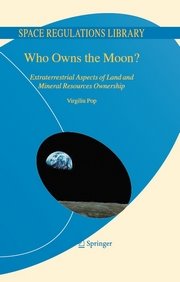
  • 1998-2007 PhD Candidate in Public International Law / Space Law, University of Glasgow, Scotland. Holder of a three-year “University of Glasgow Postgraduate Scholarship” (1998-2001). Thesis topic: “Who Owns the Moon? Extraterrestrial Aspects of Land and Mineral Resources Ownership”.
  • 1996-1997 LL.M (1998) in International and European Law, University of Aberdeen, Scotland. Holder of a Foreign and Commonwealth Office “Chevening Scholarship” and of a University of Aberdeen “C.B. Davidson Bequest” studentship.
  • 1992-1996 Lic.Iur (1996) ("Licentiat in Drept" * LL.B Hons). Honors thesis presented at the "Babes Bolyai" University, Cluj-Napoca, following law studies pursued at the "Banatul" and "Vasile Goldis" universities in Timisoara and Arad (1992-1996). Declared the "Head of the Class of 1996"(Valedictorian) at the Law School of the "Vasile Goldis" University.

Professional Experience

Academic
  • April 2007 – curr. Researcher, Romanian Space Agency, Buchaerest
  • 8 July 2005 Lecturer – “Conservatism and the Challenges of the Contemporary World”, Romanian Conservative Party Summer School, Buzias (6 hours of lectures)
  • Nov 2002- Aug 2004 Lecteur – Legal English and Political Institutions, Université Lille 2, Lille, France (full time)
  • Oct 2001 – Jan 2002 Tutor / Demonstrator - Information Technology, University of Strathclyde, Glasgow (part time)
  • 24 Jul – 5 Aug 2000 Tutor – Space Law, 9th Summer Course in Space Law and Policy, ECSL, Cologne, Germany.
  • Oct 1999 – Jun 2002 Graduate Teaching Assistant – Information Technology, IT Education Unit, Glasgow University (part time). 620 hours of effective student contact (including the Strathclyde University position)
  • Jan – Feb 1999 Graduate Teaching Assistant - Public International Law, School of Law, University of Glasgow.
  • Dec 1997-Jan 1998 Trainee Researcher, GRIP (Group for Research and Information on Peace and Security), Brussels.

Legal
  • Jun - Nov 2002 Legal Assistant / Paralegal - Refugee Law, Paton Farrell Solicitors, Glasgow, Scotland
  • Nov 1997-1998 Legal Counsel / Jurisconsult, - Real Estate Law, EKS Corporation Ltd., Timisoara, Romania.

Advisory
  • Jun 2002-curr. Director, Cosmica Network – Sweden.
  • Apr 2002-curr. Project Director for Eastern Europe, Project Alien ™ - a space education initiative
  • Mar 2002-curr. European Co-ordinator, Yuri's Night (The Global Space Party).
  • 2001 - curr. Executive Member, Space Development Council (the main UK space policy group)
  • Aug 1999 – Feb 2002 Regional Representative – Europe, Space Generation Advisory Council in support of the United Nations Programme on Space Applications - http://www.spacegeneration.org/, organism with Permanent Observer Status to the UN Committee on Peaceful Uses of Outer Space. From Feb 2002, reverted to State Rep.
  • Mar 1998-curr. Arbitrator on the list of the Commercial Arbitration Commission at the Chamber of Commerce, Industry and Agriculture, Timisoara.
  • Oct 1997-curr. External Advisor ("collaborator"), The Romanian Ombudsman, Bucharest.

Miscellaneous
  • 13 Sep – 3 Oct 1999 Receptionist for International Students, Accommodation Office, University of Glasgow.
  • Aug 1999 – Nov 2002 Senior Resident, various University of Glasgow student accommodations.
  • 5-11 Jun 1999 Steward at the EULAR’99 Conference, SECC, Glasgow.
  • 1992-1996 Freelance journalist.

Areas of Expertise and Interest
Public International Law (LL.M); Space Law; Space History; Space Policy; International Relations; Institution Building (UNSGAC); Research; Teaching; Information Technology; Foreign Languages.

Additional Qualifications

Summer and Short Courses
  • 25 Jun-24 Aug 2007 Summer Session Programme of the International Space University, Beijing, China (Certificate of Completion)
  • 10-21 Jun 2002 Lunar Base Design Workshop, European Space Agency - ESTEC (Certificate of Participation).
  • 17-22 Feb 2002 Space Station Design Workshop, European Space Agency - ESTEC, co-organized with Space Systems Institute - University of Stuttgart (Certificate).
  • 9 – 21 Jul 2000 Rhodes Academy of Oceans Law and Policy, Rhodes, Greece.
  • 30 Aug–12 Sep 1999 Summer Course in Space Law and Policy, European Center for Space Law, Geneva, Switzerland.
  • 28 Jan 1999 Training for Graduate Teaching Assistants, Tutors and Demonstrators, University of Glasgow.
  • 6 Jul – 17 Aug 1998 “College Universitaire d’Etudes Federalistes”, Aosta, Italy. (Certificat d’Etudes Federalistes).
  • Feb 16-17, 1998 “United States and International Issues in Anti-Dumping and Countervailing Duty Laws”, US Dept. of Commerce, Commercial Law Development Program, Timisoara. (Certificate of Training).
  • 25 Aug - 14 Sep 1996 “EUROregions” - The Institute for Federalism of the University of Fribourg, Switzerland (Diplôme de qualité).
  • 22 Jul - 9 Aug 1996 "Public International Law Session", The Hague Academy of International Law, The Hague, The Netherlands (Certificate of Attendance).
  • 11 - 21 Sep 1995 "Course on the International Protection of Human Rights" -Poznan Human Rights Centre, Poznan, Poland (Diploma).
  • 12 - 23 Sep 1994 "Advanced Course on the International Protection of Human Rights" – Åbo Akademi University Institute for Human Rights, Turku, Finland (Diploma).
  • Oct 1993 - May 1994 CEP Course on European Communities at the Ecological University of Timisoara (Certificate).

Conferences
  • Oct 15, 2002 Panellist at the National Space Society Leadership Symposium, Hyatt Regency Hotel, Huston, TX.
  • Oct 2002 Member of the Organizing Committee and Moderator, Space Generation Summit, Houston, TX.
  • Oct 2002 World Space Congress, Houston, Texas, USA.
  • Jun 2002 36th ESLAB Symposium - Earth-Like Planets and Moons, ESA-ESTEC, Noordwijk, NL.
  • Dec 2001 4-D Vision Workshop, Wadham College, Oxford University.
  • Dec 2001 UK Student Pugwash Conference on Science and Disarmament, Wadham College, Oxford.
  • Oct 2001 52nd International Astronautical Federation Congress, Toulouse, France.
  • Rapporteur, Session 4 of the 44th Colloquium on the Law of Outer Space.
  • Sep 2001 UN/IAF Workshop on "Making Space Applications Operational - Opportunities and Challenges for Sustainable Development", Albi, France
  • Sep 2001 2nd United Nations/Austria/European Space Agency Symposium on “Enhancing the Participation of Youth in Space Activities”, Graz, Austria.
  • Mar 2001 1st Convention of Lunar Explorers, Paris.
  • Oct 2000 51st International Astronautical Federation Congress, Rio de Janeiro, Brazil.
  • Sep 2000 1st United Nations/Austria/European Space Agency Symposium on “Enhancing the Participation of Youth in Space Activities”, Graz, Austria.
  • Mar 2000 “Science, Risk and the Regulation of New Technologies”, 21st Century Trust, Merton College, Oxford, UK.
  • Oct 1999 50th International Astronautical Federation Congress, Amsterdam, The Netherlands.
  • Jul 1999 Delegate at the Space Generation Forum of the Third United Nations Conference on the Exploration and Peaceful Uses of Outer Space UNISPACE III, Vienna, Austria.
  • Jan 1997 489th Wilton Park Conference : “International Co-operation against Drugs and Crime: Are Societies Losing the War?”, Steyning, UK
  • Jan 1997 Socio-Legal Studies Association (SLSA) Postgraduate Conference 1997, York, UK
  • Nov 1995 European Law Students (ELSA) Conference "Human Rights in Prison", Rome, Italy
  • Sep 1995 Student Conference About Nationalism "SCAN'95", Maribor, Slovenia
  • May 1994 Civic Education Project Student Conference "Transformation in Central and Eastern Europe", Kosice, Slovakia

Prizes
  • March 2007 Nominated for the 2006 Emme Award for Astronautical Literature, American Astronutical Society, for Unreal Estate: The Men who Sold the Moon
  • May 2004 First Place in the Alternative Category - Short Story of the “Why Mars” Contest, Mars Society, for An African Tale

Languages

Romanian (native), English, French (DALF), Spanish (DELE), Italian - all at high standards; Portuguese - fair.

Affiliations

International Institute of Space Law (member), European Center for Space Law (member); European Ombudsman Institute (Member); 21st Century Trust (Fellow); Chevening Society (Member); European Law Students Association (Member; former Vice-President at Aberdeen), New York Academy of Sciences (Member), Lawyers Christian Fellowship (Member), Lunar Explorers Society (Member).


Publications


Monographs


Refereed Articles

  • POP, VIRGILIU (2006), The Nation of Celestial Space, Space Policy, Volume 22, Issue 3, August 2006, pp. 205-213.
  • POP, VIRGILIU (2005), Explorarea spatiului cosmic si arta sacra, Noua reprezentare a lumii, Volume 4, pp.153-167.
  • POP, VIRGILIU (2001), The Men who Sold the Moon: Science Fiction or Legal Nonsense?, Space Policy, Volume 17, Issue 3, August 2001, pp.195-203.
  • POP, VIRGILIU (2000), Appropriation in Outer Space: The Relationship Between Land Ownership and Sovereignty on the Celestial Bodies, Space Policy, Volume 16, Issue 4, November 2000, pp. 275-282.

Articles in Other Mass Media


Contributions in Books


Conference Papers

  • POP, VIRGILIU; PISO, MARIUS-IOAN (2007), The role of the Romanian Space Agency in the Management of Natural Disasters, as a possible model for small Asian countries. Conference on Space Law and Space Applications for Disaster Management in the Asia Pacific Region, Chiangmai, Thailand, 22 November.
  • POP, VIRGILIU; PISO, MARIUS-IOAN (2007), PECS – A Perspective from Cooperating States. Space for Humans – Past 50 Years and Beyond, Warsaw, Poland, 2 October.
  • POP, VIRGILIU (2007), Space and Religion in Russia - From Cosmonaut Worship to the Orthodox Revival, ISU Alumni Conference, August 2007, Beijing, China.
  • POP, VIRGILIU (2005), Space Exploration and Sacred Art, paper presented at the 1st IAA Conference on the Impact of Space and Society / 8th Leonardo - Olats Space and the Arts Workshop, Budapest, Hungary, 16-19 March 2005.
  • POP, VIRGILIU (2004), Extraterrestrial Real Estate: Debunking the Myth, IISL-04-IISL.4.05, paper presented at the 47th Colloquium on the Law of Outer Space, 55th International Astronautical Congress, Vancouver, 6 October 2004.
  • POP, VIRGILIU (2002), Lunar Exploration and the Social Dimension, paper presented at the 36th ESLAB Symposium - Earth-Like Planets and Moons, ESA-ESTEC, Noordwijk, The Netherlands, 7 June 2002, Proceedings of the Earth-Like Planets And Moons Symposium ESLAB 36, Special Publication SP-514, European Space Agency Publications Division, August 2002.
  • POP, VIRGILIU (2001), A Celestial Body Is A Celestial Body Is A Celestial Body, IISL-01-IISL.1.13, paper presented at the 44th Colloquium on the Law of Outer Space, 52nd International Astronautical Congress, Tolouse, 2 October 2001, to be published in Proceedings of the 44th Colloquium on the Law of Outer Space.
  • POP, VIRGILIU (2001), Lunar Real Estate: Buyer, Beware!, paper presented at the 1st Convention of Lunar Explorers, March 8-10, Palais de la Découverte, Paris.
  • POP, VIRGILIU (2000), The Space Youth Advisory Council as an Intergenerational Factor in the Regulation of Outer Space, IAF-00-W.1.01, paper presented at the 30th International Astronautical Federation Student Conference, 51st International Astronautical Congress, Rio de Janeiro, Brazil, 2 October 2000.
  • POP, VIRGILIU (2000), Security Implications of Non-Terrestrial Resource Exploitation, IISL-00-IISL.4.11, paper presented at the 43rd Colloquium on the Law of Outer Space, 51st International Astronautical Congress, Rio de Janeiro, 6 October 2000, Proceedings of the 43rd Colloquium on the Law of Outer Space, pp. 335-345.
  • POP, VIRGILIU (1994), The Division of Czecho-Slovakia and the Relationship between Czechs and Slovaks in Romania, paper presented at the Civic Education Project Student Conference “Transformation in Central and Eastern Europe", Zemplinska-Sirava, Slovakia.

Speeches

  • POP, VIRGILIU (2002), Property Rights Implications of a Lunar Base, Lunar Base Design Workshop, European Space Agency - ESTEC , 14 June 2002.
  • POP, VIRGILIU (2001), Lunar Law, UKSEDS (UK Students for the Exploration and Development of Space) Conference "Moon on a Stick", Newcastle, November the 10th, 2001.
  • POP, VIRGILIU (2001), Legal Implications of Peaceful Nuclear Explosions and Nuclear Power Sources in Outer Space, UK Student Pugwash Conference on Science and Disarmament, Wadham College, Oxford University, December 15th, 2001.
  • POP, VIRGILIU (2001), Space Law in a Nutshell: Its Sources and Evolution, UK Student Pugwash Conference on Science and Disarmament, Wadham College, Oxford University, December 20th, 2001.

Dissertations

  • POP, VIRGILIU (1997), The Ombudsman of the European Union, a Dissertation submitted for the degree of LLM at the University of Aberdeen, Scotland.

Miscellaneous

  • Besides academic works, I have published creative writing works, including a poetry book in Romanian (1993).