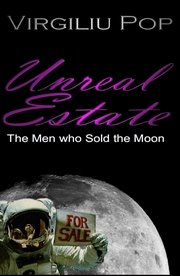
Linda, from Sciencejunkies.com (http://sciencejunkies.com/2008/02/27/unreal-estate/), reviews my book, "Unreal Estate":
"Yet another great question put forth by my ever curious 10 year-old Science Junkie: Can people own planets, stars moons, etc?
Over the past several decades, numerous individuals and companies have claimed ownership of various celestial bodies and, in most cases, subsequently offered them for sale to the public. Nowadays, the extraterrestrial “deeds” held by various companies and private citizens number in the millions.
In the 1940’s, multitudes of people submitted requests to the U.S. Bureau of Land Management for lunar homesteads. In the 1950’s, deeds for square inches of lunar property were offered as premiums with breakfast cereals. In the 1960’s, the Moon and Venus were officially annexed by several municipalities.
Now the lawyers have gotten involved. Virgiliu Pop, a Pioneer in Space Law has written a book entitled “Unreal Estate - The Men who Sold the Moon” in which he recounts fascinating stories of actual cases involving space property claims. Being a preeminent authority in the growing field of Space Law, Pop makes the legal argument that one cannot own cosmic realestate."
Wednesday, February 27, 2008
ScienceJunkies.com: Unreal Estate
Sunday, October 22, 2006
SF Gate: "Unreal estate -- for some, the moon's the limit"
Carol Lloyd, from SF Gate, interviewed me for an article on space property rights (http://www.sfgate.com/cgi-bin/article.cgi%3Ff=/c/a/2006/10/22/REGIELSHR91.DTL):
What do you get when you take the real away from real estate?
Unreal Estate, of course. Otherwise known as space real estate, this intergalactic enterprise zone has been around for centuries. ...
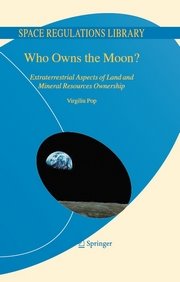
Earlier this year, Virgiliu Pop, a Romanian space law expert, published his monograph, "Unreal Estate: The Men Who Sold the Moon," which chronicles the history of celestial space grabs and their legal ramifications.
Interestingly, Pop, like many other space lawyers who have weighed in on the issue, aren't focused on consumer protection so much as the protection of his profession.
"Space law is very complex -- it deals with issues as varied as sovereignty in space, pollution in space, registration of satellites," he states in an e-mail. Since his doctoral dissertation for the University of Glasgow deals with property rights in outer space, he's concerned that Hope and other celestial "space oil" salesmen are influencing what should be a serious discussion about how to control space ownership in the future.
"This issue (of unreal estate) has hijacked the public perception of space law," he writes. The primary issues he's concerned about vis-a-vis space law currently involve how governments determine satellite positioning, and regulating satellite frequencies and other potential conflicts between national uses for outer space.
"In the public mind, space law ... does not mean regulation of the frequency spectrum, it does not mean registration. For the regular person on the street, space law concerns the sale of extraterrestrial real estate."
Sunday, August 27, 2006
El Mundo: "El hombre que vende la luna"
Julio Valdeon writes for "El Mundo" (http://www.elmundo.es/suplementos/cronica/2006/565/1156629605.html):
Virgiliu Pop, investigador de la Universidad de Glasgow y del Instituto Internacional de Ley Espacial sostiene que aunque la ley reconociera la propiedad privada del espacio Hope no sería dueño de la Luna. «Él sólo afirmó que la poseía, como si alguien sostiene que es Dios o el rey del mundo», dice. En 2001, Pop inscribió el Sol a su nombre: «Lo hice para mostrar cuán ridículo es decir que es mío porque yo lo digo. Si alguien sostiene que la Luna es suya creo que debería pagarme por la luz que recibe de mi propiedad».
Saturday, February 19, 2005
Banateanul: "Zbor Inalt"

Banateanul, a newspaper based in Timisoara, sent Bogdan Marta and Adrian Piclisan to interview me on the subject of religion and space exploration (http://old.banateanul.ro/articol/ziar/timisoara/zbor-inalt/4762/):
"Specialist în drept internaţional spaţial, timişoreanul Virgiliu Pop este pe cale de a deveni o autoritate în cel mai nou tip de artă: cea spaţială. Cercetările sale vor fi adunate în cartea "High Flight" ("Zbor înalt", în traducere), care se va ocupa de tema spaţiului reprezentat în arta religioasă.
Vaticanul spaţial: "Această artă ar putea fi numită o excentricitate. Dar şi aceasta este o formă de slăvire a gloriei lui Dumnezeu. Buzz Aldrin, unul dintre astronauţii de pe Apollo 11, a transformat modulul lunar în propriu lui spaţiu sacru, complet cu o masă de comuniune. Din această cauză, explorarea spaţială şi religia nu se bat cap în cap, ci se completează. Până la urmă, fiecare avans tehnologic se face şi cu ajutorul lui Dumnezeu", explică Virgiliu Pop, specialist în drept internaţional spaţial şi un pasionat al "artei spaţiale". Spusele timişoreanului sunt confirmate chiar de Vatican, care a acceptat ca spaţiul să fie reprezentat pe una dintre porţile bazilicii Sf. Petru, alături de lucrări ale unor artişti celebri, ca Michelangelo. Astfel, pe o uşă numită "Porta della Morte" ("Poarta Morţii", în traducere), Moartea Subită este reprezentată ca având loc în spaţiul extraterestru.
Tehnologie sau mister: Exemplele pot continua, câteodată turiştii fiind intrigaţi în faţa imaginii unei rachete sau a unui cosmonaut într-o catedrală construită în urmă cu câteva secole. Astfel, Catedrala Sf. Paul din Londra, aparţinând cultului protestant, unul dintre reperele capitalei britanice, construită în anul 604, are pictată pe unul din pereţi o rachetă, ca recunoaştere a realizărilor americane din spaţiu. Pe Catedrala din Salamanca, construită în secolul al XII-lea, există o statuie care reprezintă un bărbat îmbrăcat într-un costum spaţial. Explicaţia este simplă: lucrările sunt opere recente ale unor artişti care au participat la renovarea celor două lăcaşuri de cult.
Teren alunecos: În Biserica Ortodoxă Română, aceste reprezentări sunt aproape inexistente. Explicaţia nu constă în conservatorismul bisericii, BOR-ul neinterzicând reprezentarea unor rachete sau a aselenizării în lăcaşurile de cult, ci în faptul că fiecare pictură, fie ea şi murală este o icoană, iar pictarea acestora trebuie să respecte anumite reguli. "Icoana nu reprezintă spaţiul 3D aşa cum îl ştim noi, ci este o reprezentare a acestuia ca văzut după cea de-a doua venire a lui Cristos. Când păşeşte într-o biserică, un ortodox păşeşte defapt în Rai şi trebuie să înţeleagă care este semnificaţia profundă a evenimentelor pictate pe pereţi, a acelei rachete sau a acelei aselenizări. Până la un punct se pot folosi aceste simboluri, însă este un teren foarte alunecos pentru că pot să cadă în kitsch", explică profesorul Codin Simonca-Opriţa, cadru didactic în cadrul Seminarului Ortodox din Arad. Până la urmă, exprimarea adoraţiei către divinitate este un lucru personal, care ţine de fiecare dintre noi, chiar dacă modalitatea pe care o alegem se numeşte artă religioasă, "artă spaţială", sau, pur şi simplu, kitsch.
CARTE DE VIZITĂ. Virgiliu Pop este specialist în drept internaţional spaţial, membru al Institutului Internaţional de Drept Spaţial. S-a născut la 24 februarie 1974, în localitatea Corod, România. A studiat dreptul la facultăţile "Vasile Goldiş" din Arad şi "Banatul" din Timişoara. Este licenţiat al Facultăţii "Babeş-Bolyai" din Cluj-Napoca. În 1996, după absolvire, a obţinut o bursă pentru studii postuniversitare în drept european şi internaţional la Universitatea Aberdeen, Scoţia. S-a înscris la doctorat la Universitatea din Glasgow, Scoţia, în 1998, şi a obţinut o bursă pe trei ani. Titlul tezei sale de doctorat este "Cui aparţine Luna? Dreptul de proprietate în spaţiul cosmic".
FEREASTRĂ CĂTRE SPAŢIU. Deşi nu este sigur când şi unde a apărut într-o biserică prima pictură sau sculptură care reprezenta un cosmonaut, cert este că în mai multe lăcaşe sfinte, aparţinând aproape tuturor cultelor religioase se găsesc exemple ale acestui stil de artă. Unul dintre cele mai cunoscute exemple de aşa-numită "artă spaţială" este un vitraliu intitulat "Fereastra Spaţială" care se găseşte în Catedrala Naţională din Washington. Acesta comemorează explorarea spaţiului şi primul pas pe Lună. În partea de sus a vitraliului se găseşte o rocă de şapte grame adusă de Neil Armstrong şi Buzz Aldrin din Marea Liniştii, de pe Lună."
Monday, May 6, 2002
Lawyer Claims To "Own" The Sun

I published today the following piece on spacedaily.com (http://www.spacedaily.com/news/oped-02e.html):
They used to say - "only the Sun rises for free". Not anymore: in a move intended to expose the phony "extraterrestrial real estate" industry, a space lawyer "claimed" ownership of the Sun. "While it has become increasingly popular to 'buy' properties on the Moon and other planets, the claims of Mr. Dennis Hope of the Lunar Embassy and of other extraterrestrial real estate 'owners' and 'sellers' are ridiculous and without legal foundations" - declared Virgiliu Pop, a PhD Candidate at Glasgow University specialising in extraterrestrial property rights. "If they believe they can own a celestial body just because it has not been claimed before, and then sell it to the public, so can I say I own the Sun and charge the 'extraterrestrial owners' for solar energy".
Mr. Hope's "Lunar Embassy" is the leader in the extraterrestrial real estate business, having "sold" extraterrestrial parcels to hundreds of thousands of people worldwide - but these claims are as valid as Monopoly money. "It is indeed a celestial Monopoly game" - says Mr. Pop, whose scientific papers on extraterrestrial property rights were published in the "Space Policy" journal - "and now, I 'own' the 'electrical company' on the game board".
Mr. Pop registered his claim over the Sun on April 28th, 2001, with the Archimedes Institute Claim Registration Office, registry that has been used also by Mr. Gregory Nemitz in registering his claim over asteroid Eros. "In February 2001, Mr. Nemitz sent NASA an invoice for the parking/storage fee for the NEAR Shoemaker spacecraft, that landed on 'his' property. I can use this example and start charging Mr. Hope and the other extraterrestrial property 'owners' for the use of the sunlight - now that I 'own' the Sun. "The main question is not the legality of owning real estate in outer space" - says Virgiliu Pop; "in the case of Mr. Hope one should primarily questions the means for gaining ownership. I do deal in my thesis with the question whether one may own real estate on the moon; what I question is whether the Moon belongs to Mr. Hope".
Ownership involves not only rights, but also responsibilities; however, Mr. Pop declared himself not liable for any damage caused by "his" property in the form of skin cancer, sunstroke, solar flares, etc.
"People should wear protective sun screen, sun glasses, sun hat and drink plenty of water in order to avoid these inconveniences - but, if somebody were to sue me for damage provoked by the Sun, I do not think any court would be that unwise to consider their claims. By recognizing that I am responsible for the damage from the Sun, the court would implicitly recognize that I do indeed own the Sun - which is ridiculous".
In his claim over the Moon, Mr. Hope sees the silence from the authorities - such as the United Nations - as maintaining his extraterrestrial claims. What do the United Nations think of Mr. Pop's claim over the Sun?
Last year, while at a space congress, Mr. Pop had a laugh with one of the officials from the UN Office for Outer Space Affairs, that jokingly introduced him to another official as "The Man who Owns the Sun".
"Should I consider this as recognition from the UN of my property over the Sun"? - asks Mr. Pop? "I don't think so - as I don't think that the silence of the UN regarding Mr. Hope's claims over the Moon is to be interpreted as acquiescence". "The United Nations are dealing with too important problems for them to bother with such trivial claims. They do not send formal protests to any individual claiming to own a celestial body, as France does not send "cease and desist" letters to any individual claiming to be Napoleon".
"I want to assure the public that I do not actually believe I own the Sun" - said Mr. Pop. "My concept of ownership over the Sun is relative. I mean, I own it as much or as little as Mr. Hope owns the Moon. If he owns the Moon, so do I own the Sun. If he does not own the Moon, neither do I own the Sun. If the public believes that they can buy moon plots from Mr. Hope and his subsidiaries - then they should regard me as the owner of the Sun. I, for one, intended this move only to show how ridiculous a property rights system in outer space would be if it were to be based solely on claim unsubstantiated by any actual possession. I made this claim precisely in order to be denied!"
Would Mr. Pop change his mind and start charging earthlings for the use of his rays? "Unlikely" - he says - "as there are no means for me enforcing my claims". "Unfortunately, the only sun-blocking instrument in existence is owned by Mr. Burns, Homer Simpson's boss - and it is unlikely I can get it from him."