Sunday, January 29, 2006

"The Space Show" with Dr. David Livingston

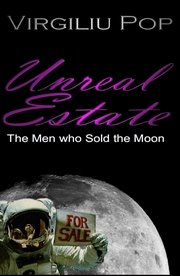
Dr. David Livingston hosts me on "The Space Show", were we talk about my new book, "Unreal Estate - The Men who Sold the Moon". The Space Show® focuses on timely and important issues influencing the development of outer-space commerce and space tourism, as well as other related subjects of interest to us all. In Dr. David Livingston's words:
Mr. Pop has done stellar research on this topic and his book is extremely informative and interesting. Many of the characters in the book are hilarious to read about and listening to Virgiliu talk about them on the show was a great experience. You will find the stores he tells to be compelling, the legal augments as to why one cannot on space real estate to be illuminating, and the entire discussion to be not only unique but very special."
"

Tuesday, January 3, 2006

"Zodia Culturii" with Simona Pele, Radio Timisoara

Radio Timisoara's Simona Pele has me as a guest to "Zodia Culturii", where she interviews me about my new book, "Unreal Estate".

Saturday, February 19, 2005

Banateanul: "Zbor Inalt"


Banateanul, a newspaper based in Timisoara, sent Bogdan Marta and Adrian Piclisan to interview me on the subject of religion and space exploration (http://old.banateanul.ro/articol/ziar/timisoara/zbor-inalt/4762/):

"Specialist în drept internaţional spaţial, timişoreanul Virgiliu Pop este pe cale de a deveni o autoritate în cel mai nou tip de artă: cea spaţială. Cercetările sale vor fi adunate în cartea "High Flight" ("Zbor înalt", în traducere), care se va ocupa de tema spaţiului reprezentat în arta religioasă.

Vaticanul spaţial: "Această artă ar putea fi numită o excentricitate. Dar şi aceasta este o formă de slăvire a gloriei lui Dumnezeu. Buzz Aldrin, unul dintre astronauţii de pe Apollo 11, a transformat modulul lunar în propriu lui spaţiu sacru, complet cu o masă de comuniune. Din această cauză, explorarea spaţială şi religia nu se bat cap în cap, ci se completează. Până la urmă, fiecare avans tehnologic se face şi cu ajutorul lui Dumnezeu", explică Virgiliu Pop, specialist în drept internaţional spaţial şi un pasionat al "artei spaţiale". Spusele timişoreanului sunt confirmate chiar de Vatican, care a acceptat ca spaţiul să fie reprezentat pe una dintre porţile bazilicii Sf. Petru, alături de lucrări ale unor artişti celebri, ca Michelangelo. Astfel, pe o uşă numită "Porta della Morte" ("Poarta Morţii", în traducere), Moartea Subită este reprezentată ca având loc în spaţiul extraterestru.

Tehnologie sau mister: Exemplele pot continua, câteodată turiştii fiind intrigaţi în faţa imaginii unei rachete sau a unui cosmonaut într-o catedrală construită în urmă cu câteva secole. Astfel, Catedrala Sf. Paul din Londra, aparţinând cultului protestant, unul dintre reperele capitalei britanice, construită în anul 604, are pictată pe unul din pereţi o rachetă, ca recunoaştere a realizărilor americane din spaţiu. Pe Catedrala din Salamanca, construită în secolul al XII-lea, există o statuie care reprezintă un bărbat îmbrăcat într-un costum spaţial. Explicaţia este simplă: lucrările sunt opere recente ale unor artişti care au participat la renovarea celor două lăcaşuri de cult.

Teren alunecos: În Biserica Ortodoxă Română, aceste reprezentări sunt aproape inexistente. Explicaţia nu constă în conservatorismul bisericii, BOR-ul neinterzicând reprezentarea unor rachete sau a aselenizării în lăcaşurile de cult, ci în faptul că fiecare pictură, fie ea şi murală este o icoană, iar pictarea acestora trebuie să respecte anumite reguli. "Icoana nu reprezintă spaţiul 3D aşa cum îl ştim noi, ci este o reprezentare a acestuia ca văzut după cea de-a doua venire a lui Cristos. Când păşeşte într-o biserică, un ortodox păşeşte defapt în Rai şi trebuie să înţeleagă care este semnificaţia profundă a evenimentelor pictate pe pereţi, a acelei rachete sau a acelei aselenizări. Până la un punct se pot folosi aceste simboluri, însă este un teren foarte alunecos pentru că pot să cadă în kitsch", explică profesorul Codin Simonca-Opriţa, cadru didactic în cadrul Seminarului Ortodox din Arad. Până la urmă, exprimarea adoraţiei către divinitate este un lucru personal, care ţine de fiecare dintre noi, chiar dacă modalitatea pe care o alegem se numeşte artă religioasă, "artă spaţială", sau, pur şi simplu, kitsch.

CARTE DE VIZITĂ. Virgiliu Pop este specialist în drept internaţional spaţial, membru al Institutului Internaţional de Drept Spaţial. S-a născut la 24 februarie 1974, în localitatea Corod, România. A studiat dreptul la facultăţile "Vasile Goldiş" din Arad şi "Banatul" din Timişoara. Este licenţiat al Facultăţii "Babeş-Bolyai" din Cluj-Napoca. În 1996, după absolvire, a obţinut o bursă pentru studii postuniversitare în drept european şi internaţional la Universitatea Aberdeen, Scoţia. S-a înscris la doctorat la Universitatea din Glasgow, Scoţia, în 1998, şi a obţinut o bursă pe trei ani. Titlul tezei sale de doctorat este "Cui aparţine Luna? Dreptul de proprietate în spaţiul cosmic".

FEREASTRĂ CĂTRE SPAŢIU. Deşi nu este sigur când şi unde a apărut într-o biserică prima pictură sau sculptură care reprezenta un cosmonaut, cert este că în mai multe lăcaşe sfinte, aparţinând aproape tuturor cultelor religioase se găsesc exemple ale acestui stil de artă. Unul dintre cele mai cunoscute exemple de aşa-numită "artă spaţială" este un vitraliu intitulat "Fereastra Spaţială" care se găseşte în Catedrala Naţională din Washington. Acesta comemorează explorarea spaţiului şi primul pas pe Lună. În partea de sus a vitraliului se găseşte o rocă de şapte grame adusă de Neil Armstrong şi Buzz Aldrin din Marea Liniştii, de pe Lună."

Thursday, August 5, 2004

Atozed: "All your base are belong to us?"

Patric Ionescu writes on his blog:

"I just found out that the sun is soon to be owned by somebody. This guy, Virgiliu Pop, who by the name seems to be a romanian (which makes me proud I must say) claimed ownership of the sun.
Here's the claim. Here's the article about this intriguing fact.
Do not be fooled. The guy wants to demonstrate the absurdity of the etraterrestrial property agencies (you know, those guys who offer to sell you pieces of land on the moon and such). Yet, if he owns the sun he might start to like the power :)
I think I must get as much tan as possible before he starts charging for it."

Sunday, May 23, 2004

"The Space Show" with Dr. David Livingston

Dr. David Livingston hosts me on "The Space Show", were we talk about the issue od "extraterrestrial real estate". The Space Show® focuses on timely and important issues influencing the development of outer-space commerce and space tourism, as well as other related subjects of interest to us all.

Saturday, May 8, 2004

Hurriyet: "4 bin metrekaresi 30 dolara Ay’da tapulu arazi"


From Hurriyet, a Turkish newspaper, an article on "selling" the Moon (http://webarsiv.hurriyet.com.tr/2004/08/05/501230.asp):

"Bu yasadaki tek sorun ise şu: Bu kontratın altında bugüne kadar örneğin Pakistan, Fas veya Meksika gibi sadece on ülkenin imzası bulunurken uzay yolculukları yapan devletlerin hiçbirisi bu sözleşmeyi imzalamadı. Bu açıdan bakıldığında sözleşmenin hiçbir anlamı yok diyor Glasgow Üniversitesi hukuk uzamı ve Uluslararası Uzay Hakları Enstitüsü üyesi Virgiliu Pop. Ve uzay yolculukları yapan devletlerin çekimser kalmaları Ay sözleşmesindeki 11.maddeyle ilgili. Bu madde, sözleşmeyi kabul eden devletlerin Ay’dan yararlanma konusunda anlaşmalarını ve halihazırdaki tüm kazanımları de diğer ülkelerle bölüşülmesini öngörüyor."

Wednesday, February 11, 2004

Newhouse News Service: "Questions of Property Rights May Bedevil Private Ventures in Space"


2004, February 11th. Newhouse News Service publishes "Questions of Property Rights May Bedevil Private Ventures in Space" by Margie Wylie, after interviewing me - "But even if simply asserting ownership could make the moon Hope's, he is a Johnny-come-lately. Virgiliu Pop, a space law expert and lecturer at the University of Lille 2 in Lille, France, points out that between 1950 and 1970 alone, there were at least four other moon claims"

Sunday, February 8, 2004

La Tercera: "Venta de terrenos en la Luna y planetas cercanos se convierte en moda comercial"


2004, February 8th. I am interviewed by Marcelo Córdova Silva, a journalist for the Chilean daily La Tercera. His article - "Venta de terrenos en la Luna y planetas cercanos se convierte en moda comercial" speaks about -
"Virgiliu Pop, investigador de la U. de Glasgow (Escocia) y del Instituto Internacional de Ley Espacial, dijo a La Tercera que lo único que se obtiene de gente como Hope es un trozo de papel que no da derechos de posesión. "Aunque la ley reconociera la propiedad privada en el espacio, Hope no sería dueño de la Luna. El sólo afirmó que la poseía, tal como alguien dice que es Dios o el Rey del Mundo", explica. Incluso, en 2001 Pop inscribió el Sol a su nombre en el Instituto de Registros Arquímedes para "mostrar cuán ridículo es decir que es mío porque yo lo digo. Si alguien dice que la Luna es suya, creo que debería pagarme por la luz que recibe de mi propiedad"."

Monday, February 2, 2004

Amcgltd.com: "How About Some Cheese Instead? "

Scott at amcgltd.com (http://www.amcgltd.com/archives/2004_02.html) writes:

"Space.com is carrying this detailed report on a business you probably don't know exists yet is amazingly profitable... selling lunar real-estate:
Every day hundreds of people fork over about $30 for 1-acre slices of the Moon and Mars. (Prices are going up: For roughly the same amount, prior to 2001, you could get 17,700 acres.) The cost includes shipping and handling of a deed, a map, and the lunar or Martian "Constitution and Bill of Rights," all printed on simulated parchment.
A lot of leftist back-and-forth about whether or not someone can sell chunks of something when there's nobody to actually buy it from in the first place. I particularly liked the blatherings of one Virgiliu Pop, a British legal scholar:
One precedent Pop draws on involves the Masai tribe in Africa, which "has a similar legal claim over all the cows in the world, yet in reality, people all over the world continue to buy and sell cattle without involving the Masai. What I dispute here is the 'it is mine because I say so' approach."
If the Masai were in charge of, say, the same resources as Germany we would take their claims far more seriously, probably devoting a whole section of the UN's world court to debate the matter endlessly while diplomats parked on the sidewalks of Manhattan and sent their daughters to Bloomingdale’s. If they controlled the resources of, say, the United States, we'd all be paying a cow tax.
Ownership of the moon depends a lot on whether or not there's anything on the moon worth owning. If it's all just dust and gravel, I fully expect some sort of high-minded international agreement along the lines of what works in Antarctica. If, on the other hand, a meteor blew the top of a mountain off and revealed, say, a gold deposit the size of Brazil, I fully expect it to be settled the old fashioned way... last one to the top the hill is a Frenchman!"

Space.com: "Lunar Land Grab: Celestial Real Estate Sales Soar"


February 2nd, 2004, United States. I am interviewed by Robert Roy Britt of Space.com. His article, "Lunar Land Grab Celestial Real Estate Sales Soar" states, inter alia:
"In a crafty stunt designed to "expose the phony extraterrestrial real estate industry," British legal scholar Virgiliu Pop declared in 2001 that he owns the Sun and can charge the "owners" of other solar system bodies for the solar energy they receive. Pop has written several papers on space property rights and is a member of the IISL. "The Lunar Embassy does not own the Moon, hence it cannot sell it," Pop said in an e-mail interview. "If you still believe you can actually own the Moon by buying it from the Lunar Embassy, then you will have to pay me utilities fees for the Sun that I own as much (or as little) as Mr. Hope owns the Moon." One precedent Pop draws on involves the Masai tribe in Africa, which "has a similar legal claim over all the cows in the world, yet in reality, people all over the world continue to buy and sell cattle without involving the Masai. What I dispute here is the 'it is mine because I say so' approach." A cornerstone of Lunar Embassy's claims -- the absence of governmental protest -- is irrelevant, Pop argues, because no protest or response was to be expected "with such trivial claim" in light of accepted international law. Pop further contends that Dennis Hope's quest, which began in 1980, came too late. "A lunar claim was lodged in Chile back in 1953," Pop says, "and a Declaration of Lunar Ownership was issued by the city of Geneva, Ohio, back in 1966."
So why don't governments put a stop to all this? "Perhaps -- and this is my opinion, not the government’s -- this is because the government is concerned right now with more important issues," Pop said. "Yet, I hope one day the government will pay attention to the Lunar Embassy’s antics."


Robert Roy Britt's article appears also on MSNBC under the title "Could lunar real estate spark a future war?"