A painter if I were, no rainbow would
suffice to paint the colors of my heart.
No shades or hues one ever used in art
would be enough to tell you what I should.
If I could sing, no lark or organs rave
could be of use for me to voice my mind.
A sculptor if I were, no marble could
imprint in forms the feelings that I have.
I’m but a poet – yet my words are few,
and even if I learnt a thousand more,
they wouldn’t be enough in an case
to spell in letters what I feel for you.
Virgiliu Pop
Timisoara, 26 May 2002
Sunday, May 26, 2002
The Art of my Soul
Monday, May 6, 2002
Lawyer Claims To "Own" The Sun

I published today the following piece on spacedaily.com (http://www.spacedaily.com/news/oped-02e.html):
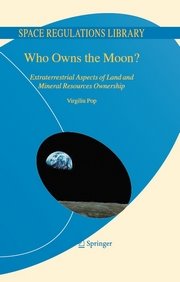
They used to say - "only the Sun rises for free". Not anymore: in a move intended to expose the phony "extraterrestrial real estate" industry, a space lawyer "claimed" ownership of the Sun. "While it has become increasingly popular to 'buy' properties on the Moon and other planets, the claims of Mr. Dennis Hope of the Lunar Embassy and of other extraterrestrial real estate 'owners' and 'sellers' are ridiculous and without legal foundations" - declared Virgiliu Pop, a PhD Candidate at Glasgow University specialising in extraterrestrial property rights. "If they believe they can own a celestial body just because it has not been claimed before, and then sell it to the public, so can I say I own the Sun and charge the 'extraterrestrial owners' for solar energy".
Mr. Hope's "Lunar Embassy" is the leader in the extraterrestrial real estate business, having "sold" extraterrestrial parcels to hundreds of thousands of people worldwide - but these claims are as valid as Monopoly money. "It is indeed a celestial Monopoly game" - says Mr. Pop, whose scientific papers on extraterrestrial property rights were published in the "Space Policy" journal - "and now, I 'own' the 'electrical company' on the game board".
Mr. Pop registered his claim over the Sun on April 28th, 2001, with the Archimedes Institute Claim Registration Office, registry that has been used also by Mr. Gregory Nemitz in registering his claim over asteroid Eros. "In February 2001, Mr. Nemitz sent NASA an invoice for the parking/storage fee for the NEAR Shoemaker spacecraft, that landed on 'his' property. I can use this example and start charging Mr. Hope and the other extraterrestrial property 'owners' for the use of the sunlight - now that I 'own' the Sun. "The main question is not the legality of owning real estate in outer space" - says Virgiliu Pop; "in the case of Mr. Hope one should primarily questions the means for gaining ownership. I do deal in my thesis with the question whether one may own real estate on the moon; what I question is whether the Moon belongs to Mr. Hope".
Ownership involves not only rights, but also responsibilities; however, Mr. Pop declared himself not liable for any damage caused by "his" property in the form of skin cancer, sunstroke, solar flares, etc.
"People should wear protective sun screen, sun glasses, sun hat and drink plenty of water in order to avoid these inconveniences - but, if somebody were to sue me for damage provoked by the Sun, I do not think any court would be that unwise to consider their claims. By recognizing that I am responsible for the damage from the Sun, the court would implicitly recognize that I do indeed own the Sun - which is ridiculous".
In his claim over the Moon, Mr. Hope sees the silence from the authorities - such as the United Nations - as maintaining his extraterrestrial claims. What do the United Nations think of Mr. Pop's claim over the Sun?
Last year, while at a space congress, Mr. Pop had a laugh with one of the officials from the UN Office for Outer Space Affairs, that jokingly introduced him to another official as "The Man who Owns the Sun".
"Should I consider this as recognition from the UN of my property over the Sun"? - asks Mr. Pop? "I don't think so - as I don't think that the silence of the UN regarding Mr. Hope's claims over the Moon is to be interpreted as acquiescence". "The United Nations are dealing with too important problems for them to bother with such trivial claims. They do not send formal protests to any individual claiming to own a celestial body, as France does not send "cease and desist" letters to any individual claiming to be Napoleon".
"I want to assure the public that I do not actually believe I own the Sun" - said Mr. Pop. "My concept of ownership over the Sun is relative. I mean, I own it as much or as little as Mr. Hope owns the Moon. If he owns the Moon, so do I own the Sun. If he does not own the Moon, neither do I own the Sun. If the public believes that they can buy moon plots from Mr. Hope and his subsidiaries - then they should regard me as the owner of the Sun. I, for one, intended this move only to show how ridiculous a property rights system in outer space would be if it were to be based solely on claim unsubstantiated by any actual possession. I made this claim precisely in order to be denied!"
Would Mr. Pop change his mind and start charging earthlings for the use of his rays? "Unlikely" - he says - "as there are no means for me enforcing my claims". "Unfortunately, the only sun-blocking instrument in existence is owned by Mr. Burns, Homer Simpson's boss - and it is unlikely I can get it from him."
Monday, April 22, 2002
Gethsemane
Holy Father and God, present ever around,
My sweat is like blood falling down to the ground.
The cup given to Me, Your power can take away,
But, without passing through death, is unnatural to raise,
As, without being born, is unearthly to die.
Behold the Cross-! tree seeded to be crucified
on body and blood, wine and bread.
The unborn pain hurts me, as the kiss I did not yet receive.
I am strangled by the cross on which I am not yet crucified.
The crown made of thorns hurts Me too
before it was seeded.
Why do I pray when the scriptures speak the fate of Your Son?
I should rather say: Let Your will, then, be done.
Virgiliu Pop
22 April 2002, Timisoara
Sunday, November 12, 2000
Corinthians
Love is patient, love is kind,
Envies not and is not proud,
Suffers all, believes in all,
Hopes in all, endures in all.
What if spoke in thousand tongues
Llke angels from above?
I’d only be a sounding brass
If all I had - but love.
If mysteries to me were plain,
My faith might mountains move.
But everything would be in vain
If all I had - but love.
The gold I have may feed the poor;
But, giving lovelessly,
Like flamess my body would endure,
Would never profit me.
While tongues may flee away from me
And prophecies will fall,
While wisdom will no longer be,
- Love will survive them all.
Glasgow, 12 November 2000
Apostle Paul, paraphrased by Virgiliu Pop
Friday, March 31, 2000
Primaveral
I fell in love with a beautiful stranger.
It could have been with a flourishing tree -
Spring makes them both spread their charm, like an angel
opens its wings unaware one can see.
But, while the tree will have faded with years
Losing its beauty while adding a ring,
The stranger’s face, showing up in my tears
Will always be how it looked in that spring.
Virgiliu Pop
Oxford, March the 31st, 2000
Sunday, December 12, 1999
Waking Dream
I thought the dreams were marble, and tried to sculpture you.
I used my eyes as chisels, and murmurs were your mould.
My restless sleep is there my workshop to unfold,
And to imprint your image in everything I do.
It’s been a while since dreaming escaped into the real,
Or, maybe, glimpse of real invaded all my dreams.
My daily lonely wonder’s no longer what it seems,
And every waking moment your touch I seem to feel.
I know the morning shadows are weaving their map.
If it’s a dream, please, whisper. I don’t want to wake up.
Virgiliu Pop
Glasgow, December the 12th, 1999
Sunday, April 9, 1995
Philemon and Baucis
Hellenic history notes, printed in lyre sound, trips of the Gods on Earth. Clothed in bulls or mortals, their descent from the Olympian heights to mingle with the crowd is a fact of the normal. The aftermath, however, is not.
That morning, Hellios was pouring upon Phrygia an unequalled soft light. On a river shore, two tired travellers were following their path to nowhere. It was, maybe, the easiest way - because the path is not imposed - or maybe the most difficult, as a guide to nowhere is impossible to find. But, while their way into space was of their choice, the one in time was decided by Chronos; with every steps they were taking, the morning was becoming noon, and the noon, evening. And, as the aim of their trip - nowhere - becomes during the night everywhere, every night the two travellers were able - or had - to stop. Either under the roof of a house, or under the hiding mantle of the night.
It would be improper to say that by the sunset the Gods have put in their way a village. Because Gods were themselves - Zeus, the master of the Universe, and Hermes - descended upon Phrygian realms from the hights of the Olympus (or, rather, from the strings of the aeds). Knocking from gate to gate, they were asking for hospitality in the name of the Olympians. But what rich household could lower itself to receive two dust-snowed travellers? The golden and silver gates were closing, one after another, in their face, the zephyr multiplying from house to house the refusal of hospitality.
It was past sunset when, eventually, the celestial eyes rested upon a home clothed in wood, the humblest house in all the village. An old man welcomed the two travellers inside.
They were telling about this old man that his love for Baucis - his wife - was limitless. The same, Baucis was thinking that the greatest gift Gods made to a mortal was Philemon. While singing their story, the strings of the lyre were stopping when they were to speak about the love they cared for eachother. Because the rest or the torment of the love cannot be played by any string.
And, when in their life it was so much love, how could they care for gold? Therefore, anything was theirs belonged to others, as that night their house was the home of two tired travellers. A godly house, I mean.
Hebe, the cup-bearer of Olympus may have to learn from the two old people when they were serving the Gods. Especially because they were unaware who the two guests were.
Treated with the best of that home, the two travellers unveiled, at midnight time, their true identity. The same, they shared with the elderly couple their decision to punish the whole village for its ingrate behaviour that day. Tormented, following the Gods, Philemon and Baucis, holding hands as always, climbed a hill where the destructive wrath of the celestial revenge could not reach them. Behind them, the village they used to live was already buried under the mirror of a lake. And in the place of the house that was their dwelling place for a life, and the dwelling place of the Gods for a night, the Godly powers have built an isle where a temple of white marble and gold laid. And Zeus was to be always present in the place he has found so much hospitality, in the form of a statue.
The Olympians were accustomed to answer with hate to hate, and with indifference to good. This time, however, Zeus decided that the elderly couple fully deserved a reward.
The temptation of the gold was indifferent to Philemon. Youth, that Gods could give back both to Philemon and Baucis, has been so beautiful, that to be lived again would have meant to destroy the memories of the past by transforming them into the sharp present. Therefore, Philemon spoke to Zeus:
“It is so hard, my master, to ask for such a huge thing as my most priced desire is. Nevertheless, in your limitless justice, you promised to us a seamless gift. I beg you, therefore, for your mercy in making so that, when time is I close my eyes forever, this shall be at once with the one I love most”.
Baucis looked with tearful eyes at Philemon. So much love as in that glance could not be comprehended even by Eros. Surprised by the modesty of the reward asked for, Zeus said: “Let it be!”, and descended together with Hermes and the elderly couple at the temple grown from the waters. Here, the Olympians told them that they were to serve Zeus until Philemon will be united in death with the one he loves. Although they did not ask for gold, Zeus gave them on that island broad orchards, and a servant - Antigona, wearing the same name as the one that, once upon a time, will be guiding Oedipus in his long wanderings. It is difficult to serve Zeus with arms weakened by old age; therefore, Antigona was to be of great help.
Merciless, time poured more old age upon Philemon and Baucis. But the fact that the godly reward will not separate Baucis of Philemon even after death was giving Baucis power to live in rest her old days.
It was noon when the claw of the ending bent Philemon’s knees. With tearful eyes, the old man prepared to give a copper coin to Charon, the one who will cross his soul over the Styx. He was alone in the orchard when death took him.
In the same moment, in the temple, Baucis saw how beautiful Antigona fell in the arms of death.
Virgiliu Pop
Saturday, April 8, 1995
Eskaton - The Last One
If the Absolute lacks an atom, it is not absolute anymore. And the Olympian absolute lacks an only thing, sufficient though to put the Gods on the same level with the mortals: they cannot oppose Destiny.
From a certain time now - who could tell its measure - Zeus seemed touched by a mysterious disease. He ceased to throw his flashes of light and malediction over Greece and Arcadia; he would rather spend some time now and then in the cave that sheltered his infancy. Rumours circulated by the nymphs were telling that the master of the Olympus was gathering his thoughts there. Sitting on a stone, with his head in his palms, he was meditating like the most ordinary philosopher. A meditating God was of no comprehension - especially if the God was the Master of the Olympus himself, known for his impulsivity, for the trigger-happiness shown in his doings. However, it seemed that reality was in tone with the rumours. Zeus himself was scared of his recent human behaviour - especially to act like a philosopher! He hated mostly the philosophers - as they were arrogating that they were immortal through their everlasting teachings. Such a daring fact could not pass unpunished; Zeus himself happened to descend on Earth to punish the thinkers, wearing the mantle of a poison cup.
Not to search a solution in a desperate case seemed to Zeus more of despise than the philosophy. Especially now, when the very Master of the Olympus happened to be in danger. He was afraid that the fact of defeating his father - Chronos- would be eventually punished. He was aware that the destiny of a God was not immune to revenge. And he was frightened by the thought that Chronos will pay back for the humiliating fact of being defeated by his own son.
Olympians noticed also that Zeus begun to act like an elderly man. And, when it happened - though rarely - to strike the earth with flash and thunder, he was doing it with shaking hands. The Master of the Universe was, therefore, growing old.
He realised himself, one day, that the revenge promised by his father could not come, as it was already there. The god of the time was making old, with every second and with every aeon, his usurping son. Thus, eternity became finite time also for Zeus. And finite time meant death - a word unknown up to then by Zeus.
Accustomed from a certain time with meditation, a thought came to Zeus’s mind. An idea that could annihilate the awful revenge. He could try to hit the destiny by killing his father. Annihilating, in other words, the Time.
He begun by destroying all the sandglasses existing in the Olympus and on Earth. But, widowed of sandglasses, time ceased not to flow. Then, for the days not to exist anymore, Zeus ordered Helios to stand fixed on the sky and descend no more. But time continued with no cease its way. Even without days. Next move from Zeus was the immobilisation of the Moon on a fixed location on the firmament. Furthermore, as Chronos gave no signs of defeat, Zeus stopped the Earth, cancelling the years. Then, the stars followed, and the galaxies. With no result. Until he realised that the Universe was pulsating of life. And every life was, by itself, an infallible horologe. Therefore, he destroyed all the beings on Earth. But in the Olympus one could still hear the rhythms of divine banquet, signs of the passage of time.
Therefore, he killed all the Pantheon. He killed, in other words, the last traces of time.
Once finished his destructive endeavour, Zeus thought that, after saving his own life by annihilating all the others, he deserves a moment of rest. Not exactly a moment, as time did not exist anymore. An eternity. Therefore, he laid on an Olympian chair.
In the silence of the rest, a rhythmic pulsation, like a tic-toc, begun to make itself heard to Zeus.
His own heart.
Virgiliu Pop
Thursday, May 20, 1993
Sunday, September 1, 1991
Autumnal
My love, I have been waiting for you, and I am still,
Though time itself got older for such a long awaiting.
Autumnal trees are sifting the leaves in their thrill,
And darkness snows its being above, the autumn stating.
I'm deafened by the silence you have put around you,
Come back to me, my sweetheart - your pain is hurting me
I pray the Lord that ending shall have an ending too,
Oblivion shall melt in its own old history...
I am still waiting, darling - as now I just have been
The autumn too got rusty for such a long awaiting,
The elder people lose, on the park paths, all they've seen,
Though autumn, in my heart love's flourished like a painting
Virgiliu Pop
Timisoara, September the 1st 1991